

INTERIOR DESIGN IN THE LAKE DISTRICT: A Regenerative Rural Retreat
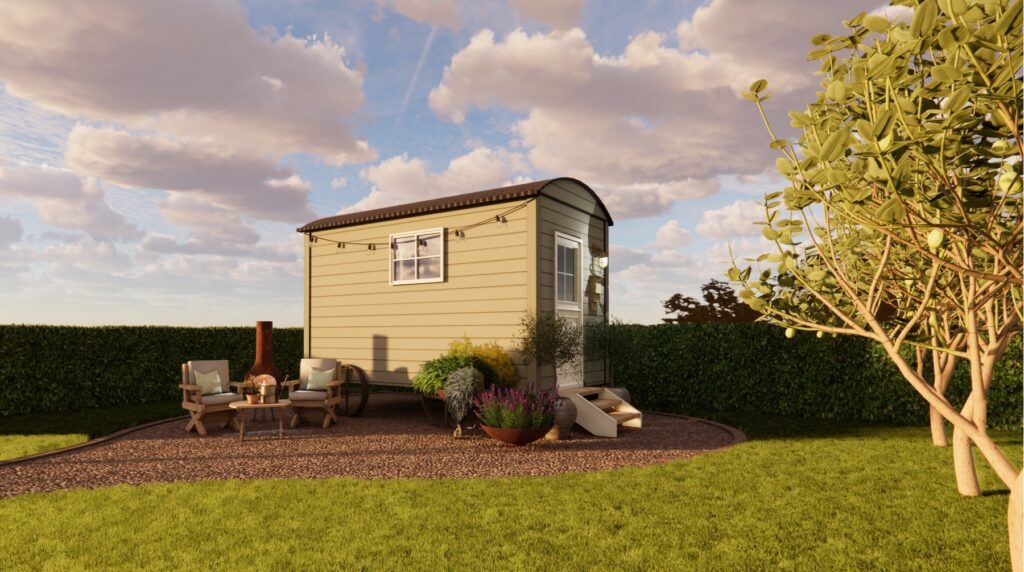
Tucked into the quiet edges of an orchard at a rural former farmstead, this small but soulful shepherd’s hut offers more than a scenic retreat, it’s a regenerative, biophilic sanctuary, designed to reconnect its visitors with nature, rhythm, and themselves.
Designed by Charlotte Findlater Design, the hut is a living expression of our studio’s ethos: that architecture and build, interiors, and landscape should be considered as one interconnected ecosystem. Every detail, from the siting of the hut, to the curve of the garden paths was crafted to promote deep rest, sensory richness, and a sense of calm continuity with the land.
What was once a bare and forgotten corner of a newly planted orchard field has been thoughtfully transformed into a multi-functional sanctuary, equally suited for slow mornings, restorative afternoons, or quiet evenings by the fire under starlit skies. Here, biophilic design and sustainable interior architecture come together to deliver a meaningful response to modern life’s pace and pressures.
A Shepherd’s Hut Rooted in Nature
The shepherd’s hut stands lightly in the landscape, framed by soft orchard grasses, apple trees, and wide views of the Cumbrian hills. While the broader farmstead leans into a rustic, agricultural aesthetic, the hut expresses its own identity, one that’s gentler, more refined, yet still deeply grounded in place.
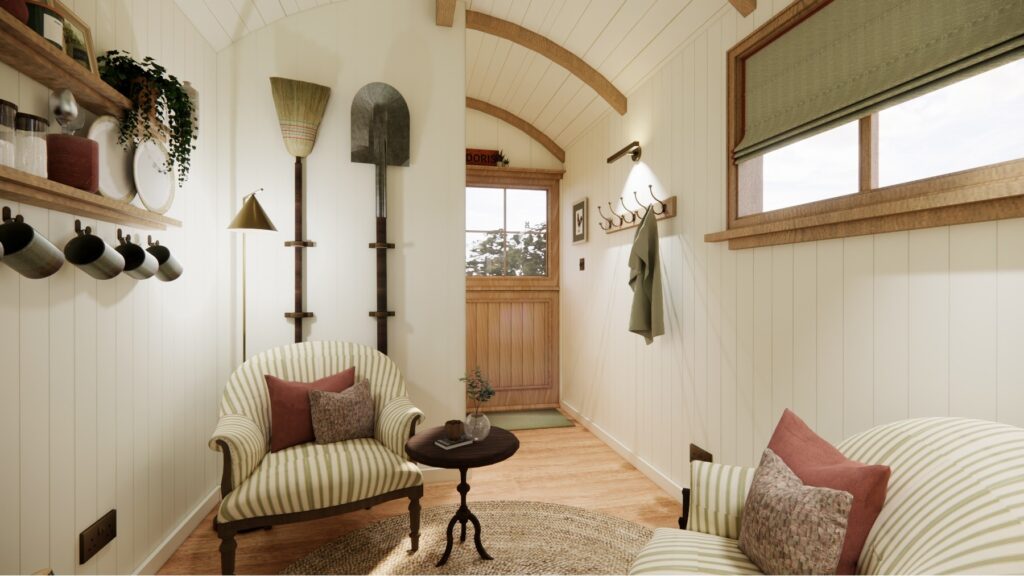
Its modest footprint holds surprising spatial depth. Inside, the layout is intentionally zoned to support both rest and creativity: nest-like corners for reading, solitude or focus, and open, light-filled zones that invite movement and inspiration. These natural patterns of enclosure and openness are drawn from the the landscape itself.
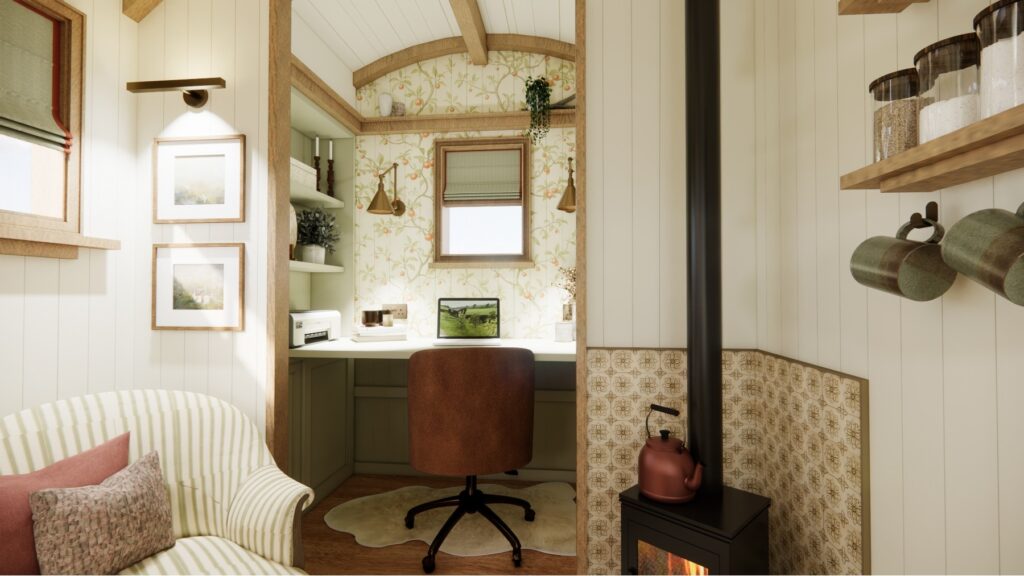
Throughout the shepherd’s hut, tactile materials anchor the senses. Locally woven Lake District Tweed, oak floors, and hand-thrown ceramics create a palette of warmth and depth. Every material was chosen not just for its aesthetic quality, but for its connection to craft, locality, and the environment. A cast
iron stove offers gentle, radiant heat, while vintage antiques and salvaged hardware bring narrative and texture into the space.
Softly muted tones, the hues of apples and pears, from deep forest greens to warm terracotta’s and the sandy shades of orchard bark and soil, were drawn directly from the landscape. Together, they form a visual rhythm that promotes quietude and emotional balance. The result is a space that feels rooted, peaceful, and deeply intentional.
INTERIOR DESIGN FOR WELLBEING: A Nature Led Workspace
This shepherd’s hut was not only conceived as a space to unwind, it was also designed as a contemplative and productive work-from-nature retreat, where creativity and focus could unfold in harmony with the natural world.
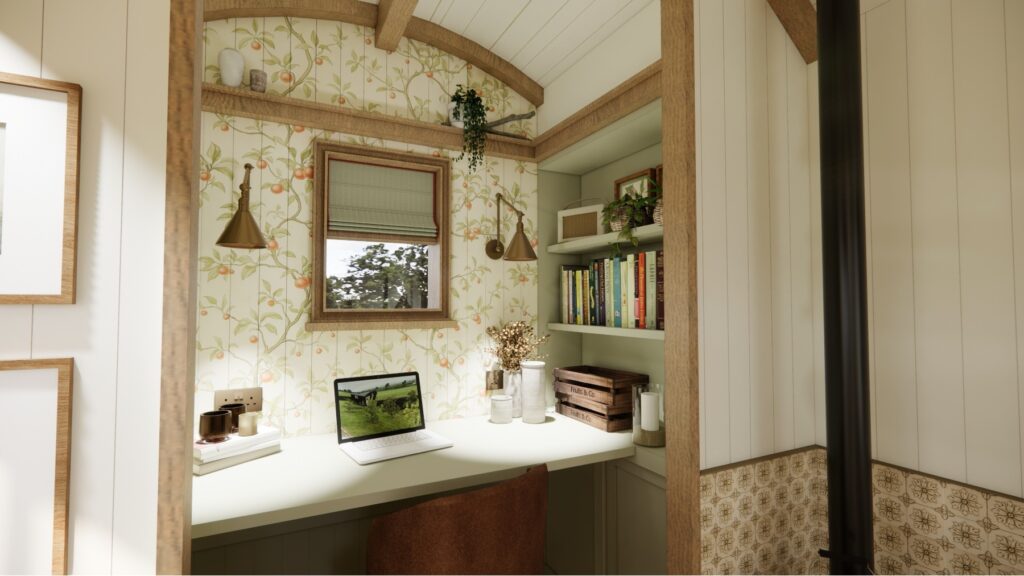
At the heart of this is a small desk nook, positioned beside a generous window to frame expansive orchard views. This placement maximises access to natural light, which plays a critical role in regulating circadian rhythms, boosting mood, and improving cognitive clarity. Even the act of occasionally glancing at the horizon, a tree line, a shifting sky, has been shown to reduce mental fatigue and stimulate creative thinking.
Grounded in biophilic and salutogenic design, the workspace blends sensory richness with psychological support. Natural materials such as wool, oak, linen, and clay absorb sound, soften acoustics, and offer comfort through touch, counteracting the often overwhelming nature of tech-led environments.
Meanwhile, the subtle scent of aged timber, the quiet crackle of the stove, and the sounds of birds and breeze outside deepen the sense of immersion.
Zoning within the hut mirrors natural systems: enclosed “nest” areas foster focused concentration, while light-drenched “meadow” spaces support more open-ended exploration and idea generation. This spatial choreography encourages a more human way of working, one that moves fluidly between stillness and activity, and between solitude and connection.
CRAFTED SUSTAINABILITY: Rooted in Place
Sustainability is not treated as an afterthought but as a foundational design principle, integrated into every decision, material, and gesture. From sourcing to installation, the goal was to create a space that is
environmentally responsible, emotionally nourishing, and lasting in both form and feeling.
Much of the materials used throughout the project were locally sourced or reclaimed. From Lake District Tweed spun with native Herdwick wool, to handmade pottery from nearby Morecambe Bay, the interiors reflect the craft culture and natural resources of Cumbria. These materials are not just sustainable, they’re soulful, imbued with local story and enduring quality.
Additional features include:
- A recycled Jøtul wood-burning stove, made from old cast iron stoves repurposed through clean-burn technology
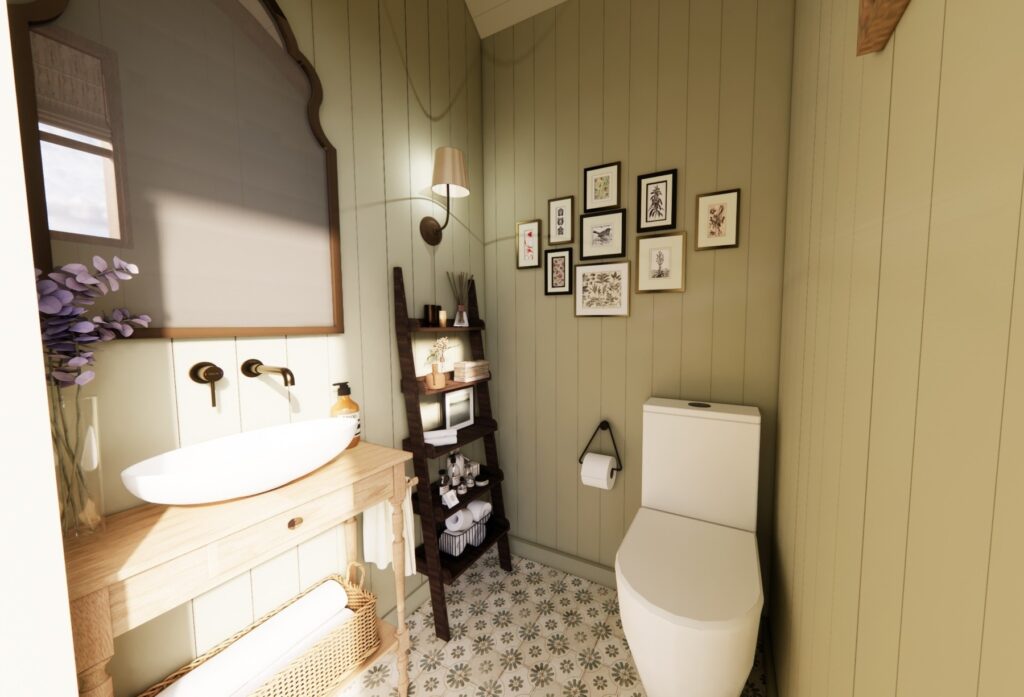
- Vintage furnishings, salvaged from local antique dealers
- Sustainably crafted wooden furniture from Pepe, a British B Corp working with FSC-certified Scandinavian redwood
- Natural paints, low-VOC finishes, and breathable materials to support healthy indoor air quality
Each of these elements contributes to a space that not only reduces its environmental impact but actively supports the health and wellbeing of its occupants. The result is a regenerative interior, one that feels elegant, grounded, and wholly in sync with the land it inhabits.
ECOSCAPING and BIODIVERSITY: A Garden Designed To Give Back
The surrounding garden was designed using ecoscaping principles, balancing beauty, biodiversity, and longevity. From the start, the landscape was seen as an extension of the interior, and every element — from planting to seating — was chosen to serve both people and planet.
Biodiversity features include:
- Pollinator-friendly plants such as lavender, wild herbs, and native grasses
- Habitat enhancements like bat boxes and birdhouses
- Natural movement and sound, from grasses to chickens, creating a multi-sensory experience
This deeply connected approach to landscape design in the Lake District blurs the boundary between inside and out, encouraging reflection, rhythm, and immersion in the natural world.
A Thoughtful Vision of Sustainable Luxury
This shepherd’s hut encapsulates the values that guide all Charlotte Findlater Design projects: sustainability, biophilia, craftsmanship, and timeless beauty. It is a celebration of what can happen when interiors are created with purpose, where design is not about trend or excess, but about connection, context, and care.
This is not simply a place to stay. It’s a place to reconnect: with nature, with stillness, with your own creative rhythm. Whether you’re looking for ecoconscious design inspiration, a remote working retreat, or a case study in regenerative small-space living, this project offers a quiet yet powerful blueprint.
It shows that small spaces can hold immense depth. That luxury can be low impact. And that when architecture, interior design, and landscape speak in harmony, the result is something truly enduring.